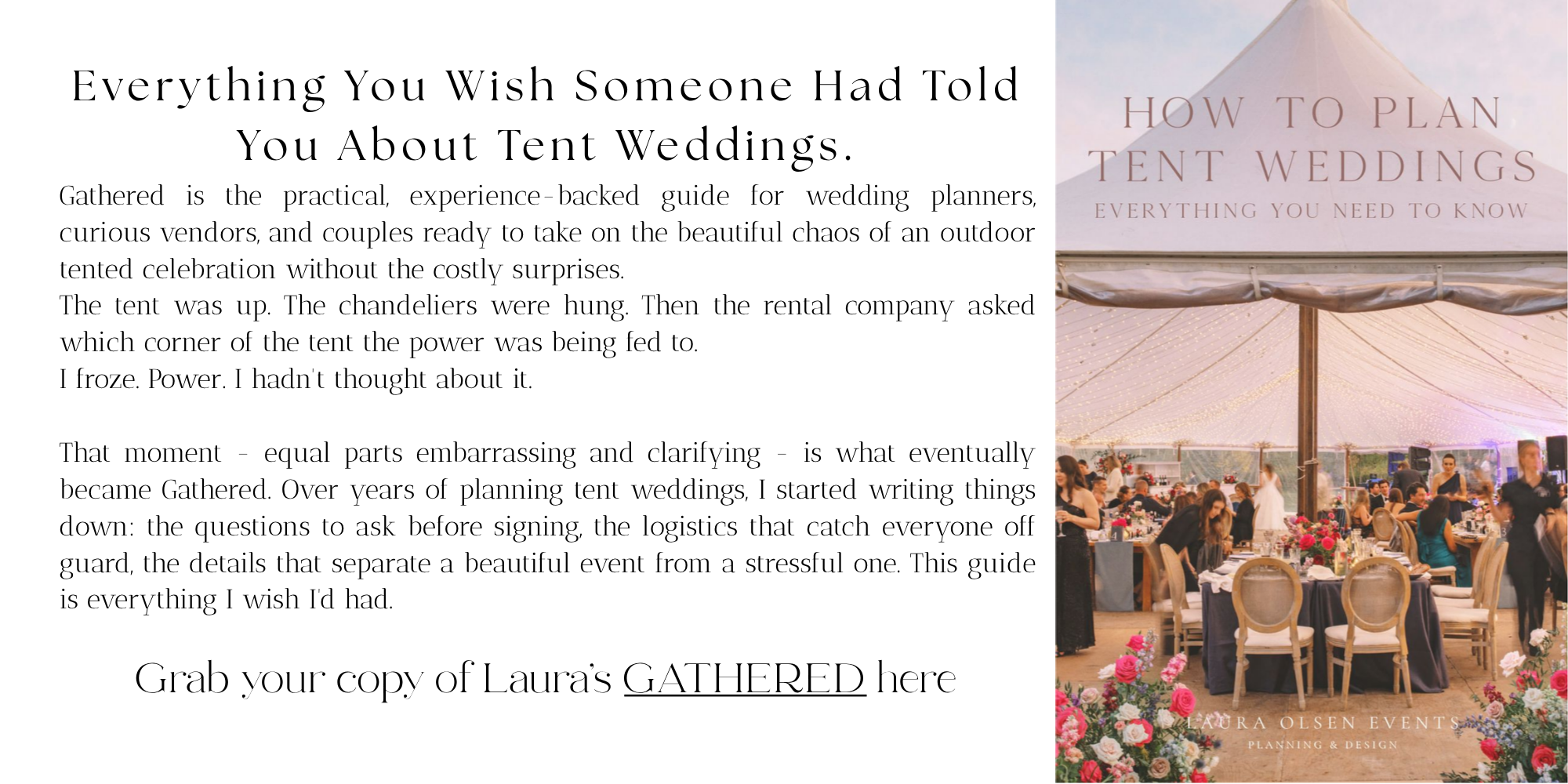
Tent Wedding Florals | where to focus your budget, what to skip, and what couples often forget
When couples envision a tent wedding, they often picture a beautiful white canopy, lush florals, glowing candlelight, and an unforgettable celebration under the stars. While tent weddings create incredible opportunities for personalization, they also come with unique design and logistical challenges that many couples don't realize until they're deep into the planning process.
As a florist, I've worked alongside planners like Laura Olsen Events on tented weddings throughout Ontario, and one thing is always true: successful tent weddings happen when the planning, design, and floral teams work together from the beginning. Whether you're hosting your wedding in a backyard, on a family property, or at a private estate, understanding how florals work within a tented environment can help you prioritize your budget and maximize visual impact.
Understanding Your Tent: Pole Tent vs. Frame Tent
One of the first questions both your planner and florist will ask is what type of tent you're using. While couples often focus on guest counts and layouts, the tent structure itself has a significant impact on floral design, installation logistics, and overall visual impact.
Pole Tents
Pole tents feature center poles throughout the structure that support the tent canopy. These poles naturally become focal points and can be transformed into stunning design elements with floral installations, greenery wraps, hanging arrangements, or statement lighting.
The advantage? The poles provide built-in structure for décor.
The challenge? Those poles can interrupt sightlines and floor plans, meaning floral placement requires strategic planning.
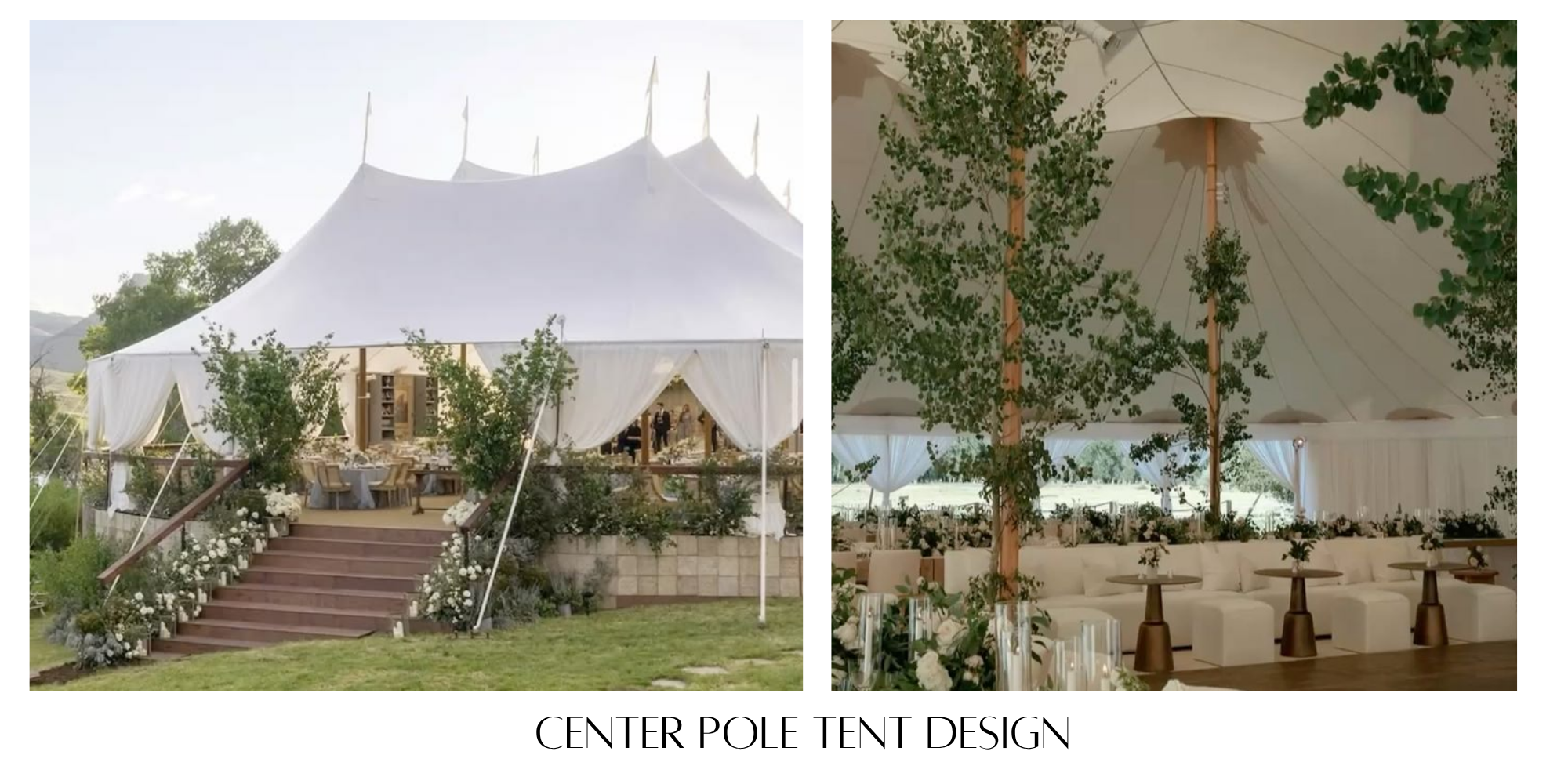
Frame Tents
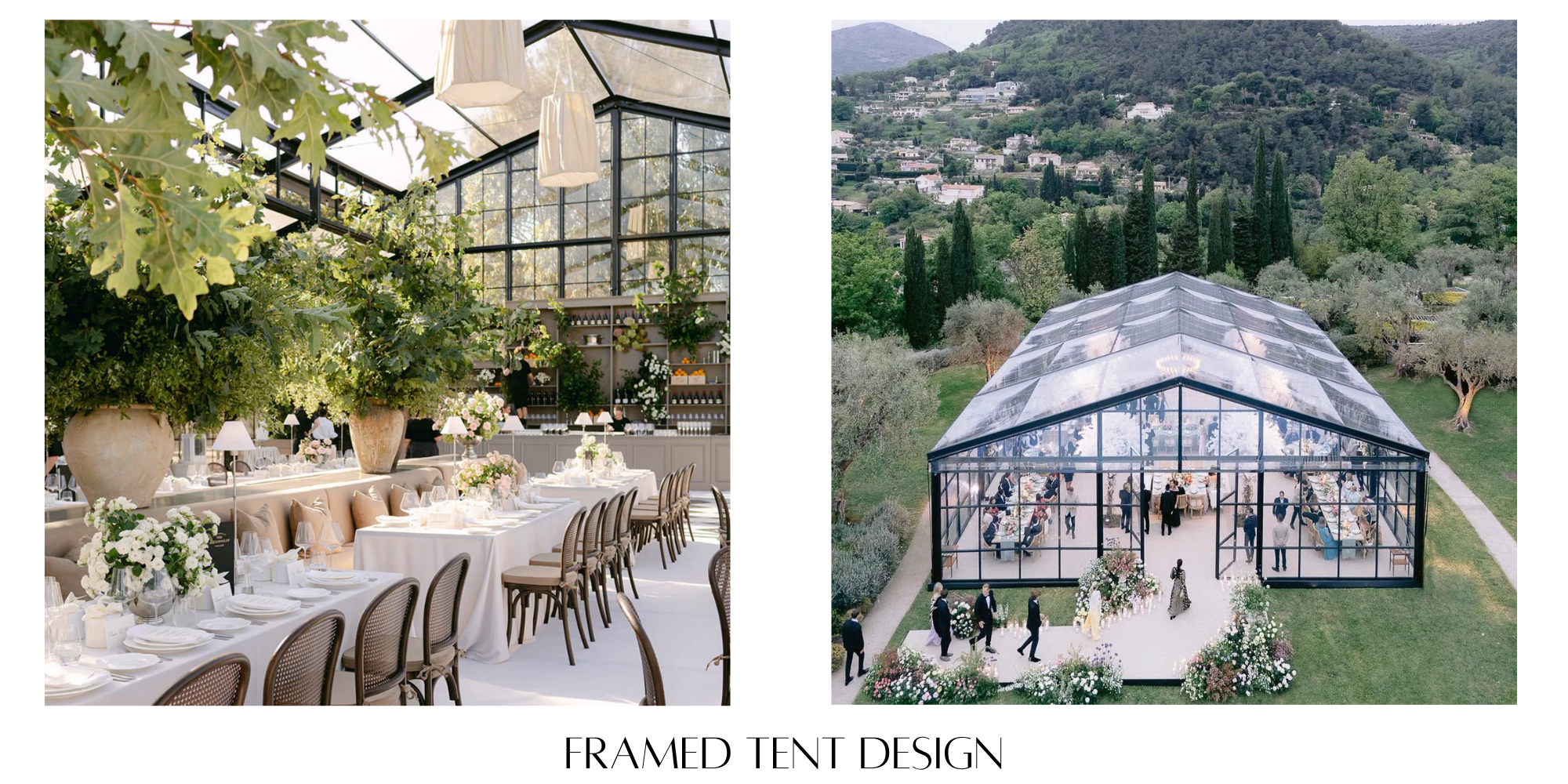
Frame tents don't have interior center poles, creating a completely open floor plan. This flexibility is ideal for layouts and guest flow, but it also means there are fewer built-in opportunities for floral installations.
Without poles, florals often need to be concentrated around:
The head table
Ceremony backdrop
Dance floor
Bar area
Entrance points
Hanging installations from engineered rigging
Frame tents often require larger-scale design elements to create the same visual impact that pole tents naturally provide.
"Knowing the tent type early allows us to create a design plan that works with the structure rather than against it," says Sue Gallo of Sue Gallo Designs. "A floral installation that looks stunning in a pole tent may require a completely different approach in a frame tent."
Where to Invest in Tent Wedding Florals
One of the greatest advantages of working with an experienced planner like Laura Olsen Events is understanding where your design budget will have the most impact. Rather than spreading florals evenly throughout a tent, planners and florists often work together to identify the key guest touch points and photographic moments.
1. The Ceremony Space
This is where some of your most photographed moments happen. A beautiful ceremony installation can often be repurposed later behind the head table or sweetheart table, maximizing your floral investment and reducing waste.
2. The Head Table or Sweetheart Table
Guests' eyes naturally gravitate here during speeches, dinner, and throughout the evening. A lush floral focal point behind or in front of the couple creates lasting impact and anchors the entire reception design.
3. The Tent Entrance
First impressions matter. Floral arrangements at the entrance immediately establish the wedding's style and welcome guests into the experience.
4. Statement Hanging or installation Features
Whether it's a floral chandelier, suspended greenery installation, or a dramatic installation piece over the dance floor or behind the bar, one impactful statement design often creates more visual drama than dozens of smaller arrangements.

Where You Can Save
One of the most common misconceptions about tent weddings is that every table needs an elaborate centerpiece.
In reality, guests experience the overall atmosphere more than individual details. The most memorable weddings often feature a few intentional focal points rather than florals everywhere.
Consider saving budget by:
Choosing low centerpieces
Keeping guest tables simpler while investing in statement installations, such as entrance florals or suspended installation over the dance floor, dramatic entrances or dramatic bar installations.
Focusing on key sight lines rather than decorating every corner
Repurposing ceremony flowers into reception spaces
The most successful tent wedding designs prioritize strategic focal points rather than trying to fill every square foot with flowers.
Floral Challenges Couples Don't Think About on Private Properties
Private property weddings offer unmatched flexibility and sentimental value, but they also remove many of the built-in conveniences that traditional venues provide. While the setting may feel effortless to guests, creating a beautiful tented wedding requires months of planning and coordination behind the scenes.
According to Laura Olsen Events, many couples underestimate how much infrastructure is needed before a single flower is installed.
"At a traditional venue, power, water, loading areas, and event flow have already been established," explains Laura Olsen. "On a private property, we're often creating an event venue from scratch."
From a floral perspective, those logistics directly influence what can be designed, where installations can be placed, and how flowers perform throughout the day.
Weather Isn't Just a Backup Plan Concern
Most couples think about rain, but experienced planners and florists think about wind, heat, humidity, direct sun exposure, and even overnight temperatures.
Flowers that look perfect during a morning installation can begin to wilt by ceremony time if they are placed in full afternoon sun. Delicate blooms such as sweet peas, garden roses, or hydrangeas may require additional hydration and protection during hot summer weddings.
Wind presents another challenge, particularly for large ceremony pieces and elevated floral installations. What looks beautiful in a design rendering must also be engineered to withstand unpredictable weather conditions.
This is where collaboration between the planner, tent provider, and florist becomes critical long before wedding day.
The Reality of Creating a Venue From Scratch
One of the biggest surprises for couples is how much infrastructure exists behind the scenes at a private property wedding.
Items such as:
Generators
Catering tents
Washroom trailers
Vendor parking
Power distribution
Water access
Waste management
Lighting systems
all need designated locations.
While these elements are necessary, they can impact sightlines, guest experience, and floral placement if they aren't considered early in the planning process.
A skilled planner like Laura Olsen Events helps create a comprehensive site plan that allows floral designs to enhance the guest experience rather than compete with operational necessities.
Installation Access Can Change Everything
Many couples fall in love with large-scale floral installations on Pinterest without considering how those designs actually get built or budget for the structural installation foundations, and installation timelines.
Long rural driveways, uneven terrain, narrow garden gates, soft ground conditions, and limited vehicle access can significantly affect setup timelines and labor requirements.
For florists, transporting hundreds of stems, large containers, arches, and installation equipment across a property can become a major logistical undertaking and needs to be budgeted accordingly.
At Sue Gallo Designs, site visits are often essential for tent weddings because what appears straightforward in photos may present entirely different challenges in person.
Tent Scale Is Often Misunderstood
One of the most common design mistakes couples make is underestimating the scale of a tent.
When couples tour an empty tent, it often feels intimate. Once tables, chairs, dance floors, bars, and guests are added, the space can feel dramatically different.
Conversely, large tents can sometimes feel cavernous if there aren't enough design elements creating visual balance.
This doesn't necessarily mean spending more on flowers. Instead, it means strategically placing florals where they create the greatest visual impact.
For example, a dramatic hanging installation over the dance floor may have more impact than adding elaborate centerpieces to every guest table.
Lighting and Florals Must Work Together
One often-overlooked challenge is the relationship between floral design and lighting design.
A stunning floral installation can disappear after sunset if it isn't properly illuminated. Likewise, poorly positioned lighting can cast shadows on key floral focal points.
When planners, florists, and lighting professionals collaborate early, floral designs can be enhanced rather than diminished as the event transitions from day to evening.
This is particularly important for tent weddings where the atmosphere changes dramatically after dark.
Breakdown Logistics Matter Too
Couples naturally focus on setup, but teardown deserves consideration as well.
Many private properties have noise restrictions, overnight access limitations, or specific requirements regarding cleanup and restoration.
Large floral installations that took hours to construct must often be safely dismantled late at night or early the next morning.
Understanding these logistics in advance helps ensure floral designs remain both beautiful and practical.
The Value of Early Collaboration
The most successful tent weddings happen when floral design isn't treated as a standalone decision.
When planners like Laura Olsen Events and florists like Sue Gallo Designs are involved early in the planning process, they can identify potential challenges before they become costly surprises.
The result isn't necessarily more flowers—it's smarter floral design. Every installation, centerpiece, and focal arrangement is carefully considered within the context of the property, tent structure, guest experience, and overall wedding vision.
That's what transforms a tent on a private property into a truly unforgettable wedding environment.
The Key to Successful Tent Wedding Flowers
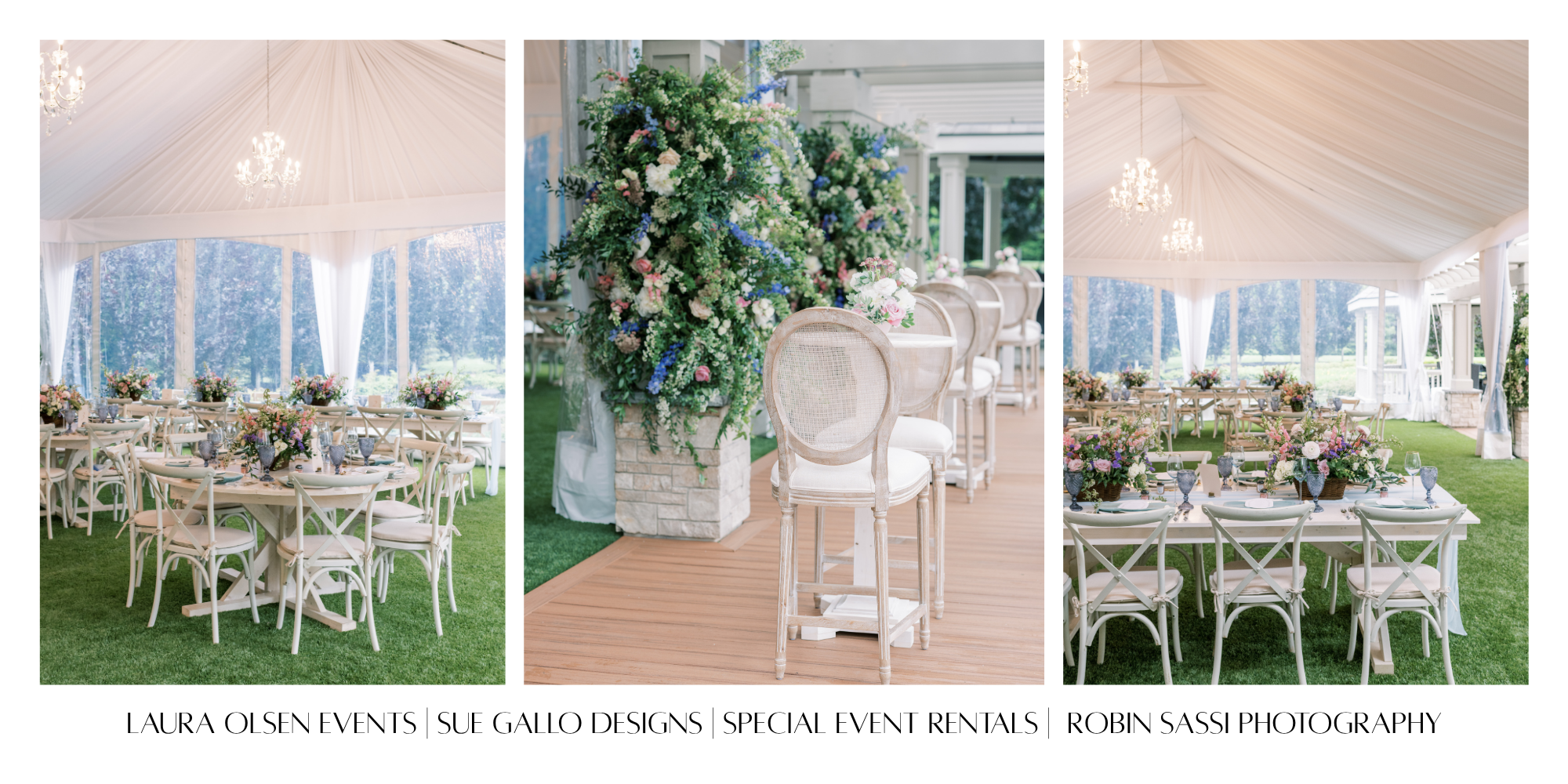
The best tent wedding floral designs aren't necessarily the ones with the most flowers. They're the ones that thoughtfully guide guests' attention toward the moments that matter most.
By understanding your tent structure, prioritizing focal areas, and planning for the unique challenges of private-property weddings, you can create a beautiful floral experience that feels intentional, elevated, and unforgettable.
When planners like Laura Olsen Events and floral designers like Sue Gallo Designs collaborate from the earliest stages of planning, couples are able to make informed decisions about both logistics and aesthetics, ensuring every floral investment contributes meaningfully to the overall guest experience.
The result is a tent wedding that feels seamless, welcoming, and beautifully designed from the moment guests arrive until the final dance under the tent lights.